Florida Weddings
Planning a Wedding in Palm Beach or Boca Raton? How to Choose the Right Live Musicians
For a Palm Beach or Boca Raton wedding, choose musicians by listening to the ensemble, confirming the event-specific quote and checking how the performance will work at your venue. A polished live-music plan connects the sound you love with practical details: access, ceremony cues, guest layout, weather protection and the transition to cocktail hour.
Begin with the full venue address
“Palm Beach” can describe a ceremony on the island or a celebration elsewhere in the wider area, including West Palm Beach. Boca Raton events can take place at hotels, clubs, private properties and other settings with very different arrival procedures. Give the musicians the full address, not just the regional name.
Ask your planner or venue for the vendor entrance, unloading location, parking instructions and contact person. At a gated property or club, establish who authorizes entry. A guest-facing entrance is not always the correct route for instruments and equipment.
Amadeus serves Palm Beach, West Palm Beach and Boca Raton as part of statewide Florida coverage. These service areas are not claims of an office in each city or a partnership with a particular venue. Your event details and date determine the availability discussion.
Listen for the sound that fits your ceremony
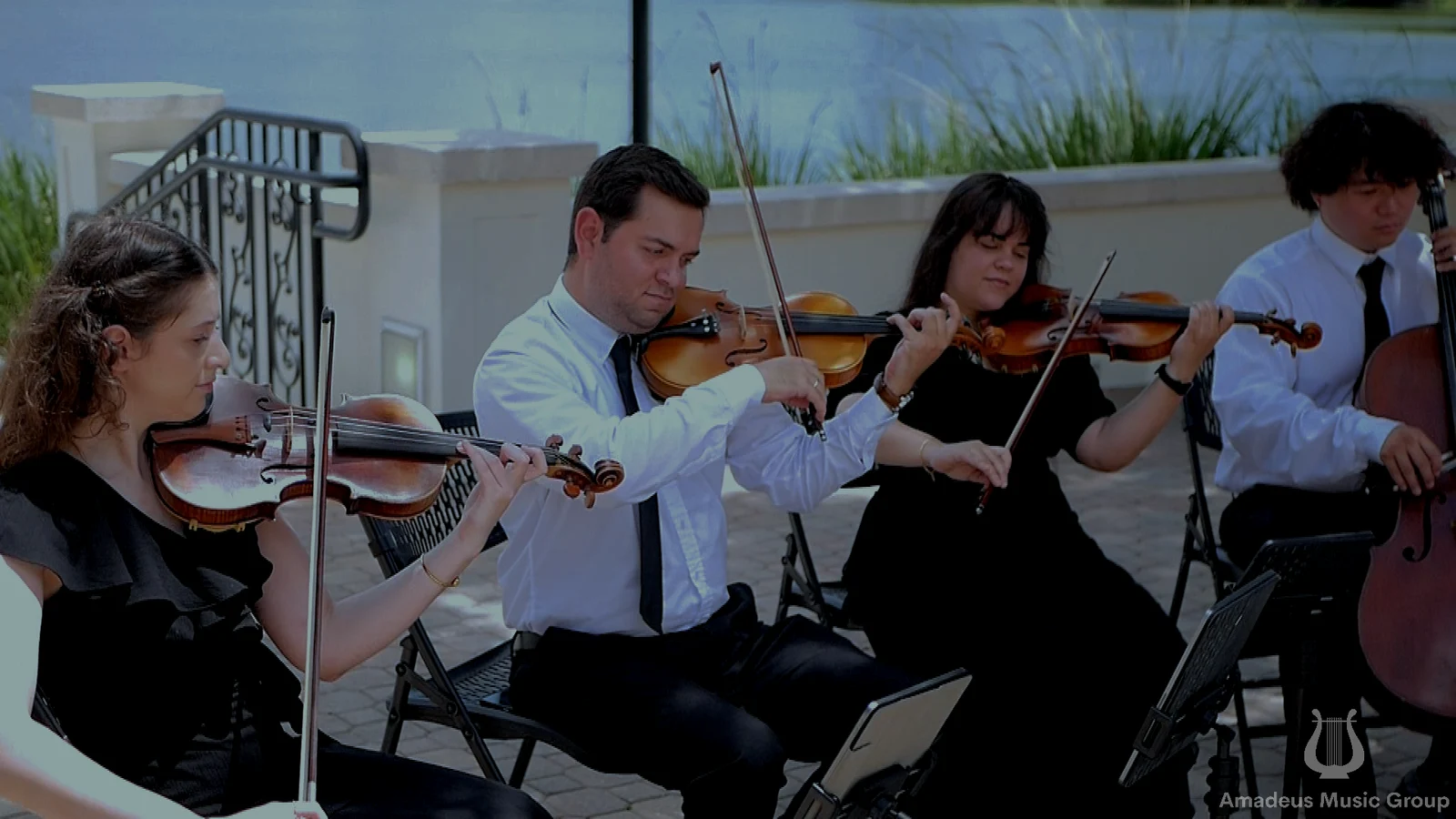
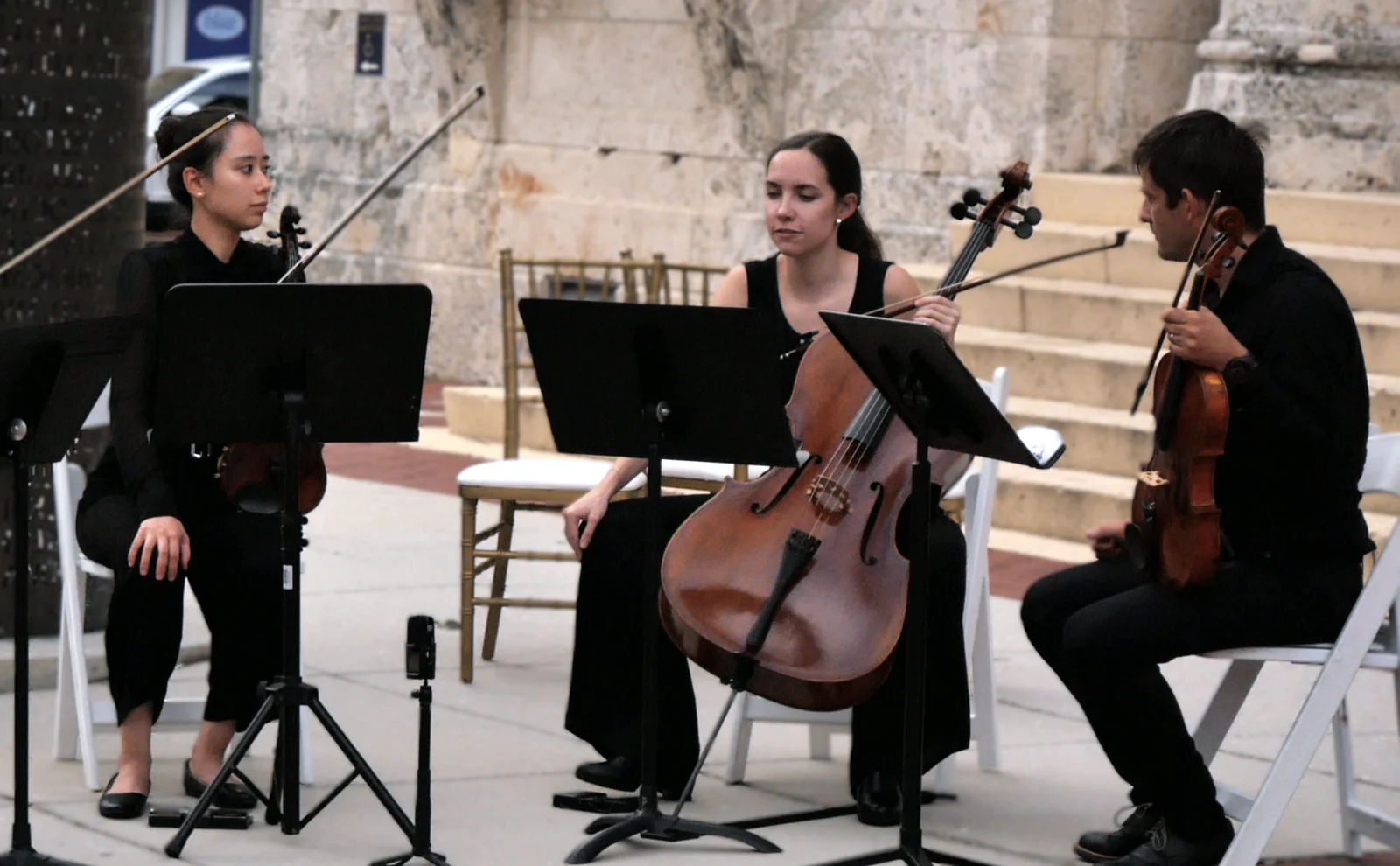
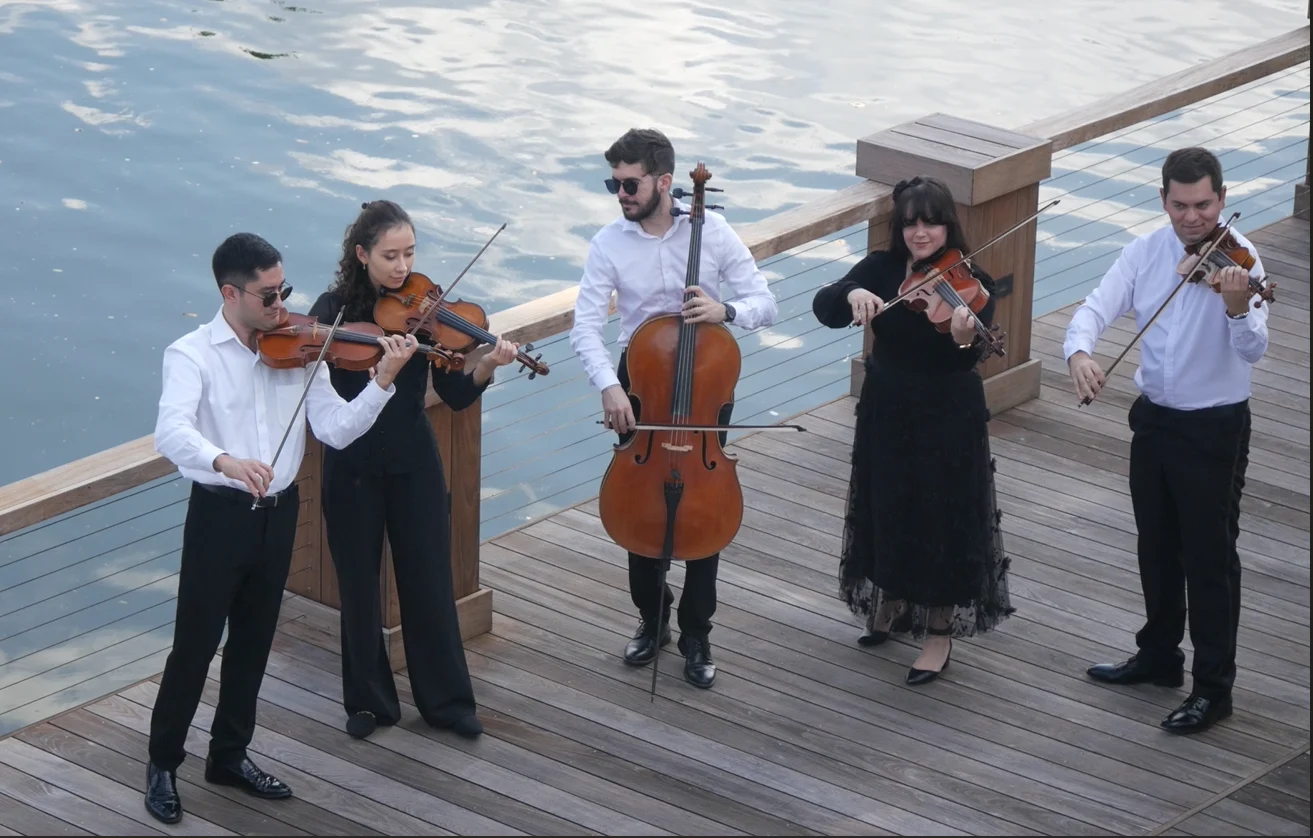
A solo violinist brings a focused melody; a duo adds a complementary voice; a trio offers more layered texture; and a quartet provides four-part harmony. None is automatically correct because a venue is described as luxury or because the guest list reaches a particular size.
Choose samples that reflect the music you want to hear. If you love a contemporary arrangement, ask whether it is suitable for your chosen lineup. If you prefer classical music, notice whether you enjoy a spare melodic performance or the dialogue between several string parts.
At an elegant indoor ceremony, the visual presence of the ensemble may be part of your decision. It still needs a practical position: musicians should be visible where appropriate without obstructing the aisle, doors or photographers’ movement. Ask the venue to include them in the floor plan early.
Indoor acoustics and venue rules
Reflective rooms can give strings a resonant sound, while heavily furnished spaces may feel more subdued. A ballroom, intimate salon and place of worship need different placement discussions. Guest seating and the spoken ceremony matter as much as the room’s appearance.
Ask about music approval requirements, preferred vendor access procedures and any restrictions on equipment or performance locations. For religious ceremonies, confirm repertoire with the officiant before committing to a contemporary song. Do not assume an event venue’s general permission covers every selection or setup.
If the venue requests a Certificate of Insurance, send its instructions during planning. Amadeus is fully insured and can provide a COI for venue requirements. That administrative step should be coordinated through the actual venue contact rather than left for arrival day.
Beach and waterfront ceremonies
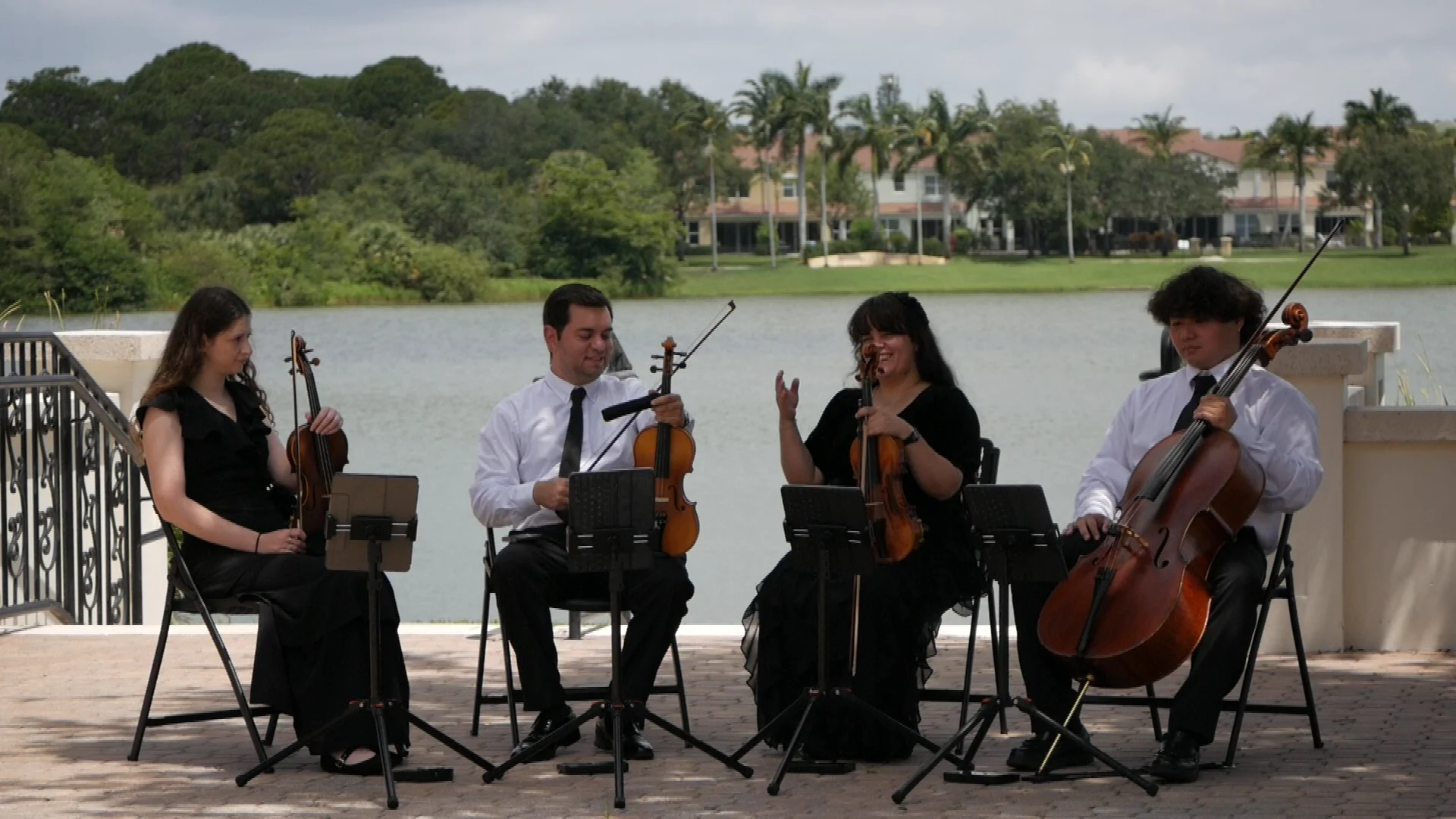
Waterfront scenery can make a beautiful setting, but surf, wind, fountains and nearby activity can affect audibility. The best musician position is not necessarily the most exposed scenic corner. It needs to support listening while protecting instruments from rain, direct sun, sand and spray.
Share the expected guest layout and ceremony time. Discuss whether acoustic placement is sufficient or whether amplification should be considered. Also identify who provides the officiant’s microphone; speech sound is a separate responsibility from a live string performance.
Build the weather alternative around a real location. Confirm who decides to move, where the ensemble will sit indoors or under appropriate cover, and how relocation changes the schedule. A rain plan for guests is incomplete if it leaves the musicians without a safe performance area.
Make cocktail hour feel connected, not identical
The ceremony might call for reflective entrance music while cocktail hour benefits from a lighter mix of classical and contemporary selections. Tell the musicians about the atmosphere you want rather than asking them to repeat the processional mood for the entire reception.
If guests move from a ceremony lawn to an indoor lounge or terrace, account for the musicians’ relocation. They need to carry instruments, reach the new position and reset. A short distance on a floor plan can still involve stairs, service routes or a busy guest passage.
Discuss the desired listening area. Music should support mingling without competing with conversation, and one ensemble position may not cover every part of a large property. If several gathering spaces are involved, let the venue and musicians review the plan before promising uninterrupted music everywhere.
Coordinate the planner, officiant and audio team
One current timeline should show prelude start, processional order, entrance cues, recessional and cocktail-hour coverage. Assign a cue-giver who can see the wedding party and communicate with the ensemble. A printed start time alone does not indicate when everyone is ready.
If a DJ manages ceremony microphones or takes over at the reception, introduce the teams before the event. Confirm who handles announcements, recorded tracks and any sound checks. The transition should not depend on assumptions about another vendor’s package.
For destination couples, these discussions can begin with a floor plan, photographs and a shared email thread. An in-person visit is helpful when possible, but you can still provide precise information remotely. Ask your planner to verify the performance positions at the actual property.
A regional inquiry checklist
Amadeus can discuss the musical plan without inventing local venue endorsements or promising a particular performance history. Explore our existing Palm Beach and Boca Raton service pages, then send your date and venue to request availability and a tailored quote.
- Exact date and Palm Beach, West Palm Beach or Boca Raton venue address
- Preferred ensemble and two or three listening examples
- Ceremony and cocktail-hour start and finish times
- Indoor and outdoor performance locations
- Safe weather alternative and venue sound restrictions
- Vendor access, parking, insurance instructions and planner contact