Wedding Music & Repertoire
Solo Violinist, String Duo, Trio, or Quartet: Which Is Right for Your Wedding?
The right wedding ensemble depends on the sound you love, the arrangement, the venue and your budget—not a rigid guest-count rule. A solo violinist offers a focused melody; a duo adds another voice; a trio brings more layers; and a quartet offers full four-part string texture. Start by listening, then match that musical experience to your celebration.
Compare musical texture before choosing a size
The number of players changes what the music can do. One performer cannot reproduce every independent line in a four-part arrangement at the same time. Equally, a smaller ensemble can be a deliberate aesthetic choice: an exposed violin melody may be exactly what you want for a personal entrance.
These are approved Amadeus starting prices, not guaranteed totals. Location, duration and requirements affect the quote. The musical descriptions are a starting point too: individual arrangements can make the same song feel quite different on different ensembles.
| Format | Sound and presentation | Practical consideration | Starting price |
|---|---|---|---|
| Solo violinist | Direct melody and a single visual focal point | Choose songs that work without full accompaniment | $600 |
| String duo | Two complementary voices; often violin and cello | Confirm the instrument pairing and arrangement | $900 |
| String trio | Three layers with a compact ensemble presence | The specific lineup affects range and texture | $1,100 |
| String quartet | Four-part harmony; traditionally two violins, viola and cello | Allow room for four players and safe bow movement | $1,300 |
When a solo violinist is the right choice
Solo violin puts the expressive musical line in the foreground. It can suit a reflective entrance, a short personal ceremony or a setting where you want one clearly visible performer rather than a group. Listen for whether you enjoy the melody on its own, rather than mentally filling in a band accompaniment from the original recording.
A song with a distinctive tune can remain recognizable when the texture is stripped back. A song whose appeal comes mainly from a beat, production effect or layered vocals may feel very different. Ask to discuss the actual arrangement instead of assuming that every favorite pop recording translates unchanged to solo violin.
A compact setup does not mean no setup. The musician still needs a safe performance area, appropriate outdoor protection and clear ceremony cues. A large guest list does not automatically rule out a soloist, but audibility must be considered separately from musical preference.
What a duo adds
A duo lets two musicians share melody, accompaniment or musical dialogue. A violin-and-cello pairing can provide a singing upper line supported by a lower register. Two violins create a different balance. Confirm the combination rather than treating every “string duo” as identical.
This format can work well when you want more support than solo violin while keeping the visual presentation understated. It is useful to compare a duo recording with a quartet recording of a similar style: notice the amount of harmony, the bass presence and the way the music fills the pauses between melodic phrases.
For cocktail hour, a duo can create an intimate, conversational atmosphere. Its suitability depends on where guests gather and what else is happening, not an automatic cutoff at a particular number of attendees. A duo playing near a sheltered terrace may be heard differently from the same duo beside an open waterfront bar.
Why choose a trio?
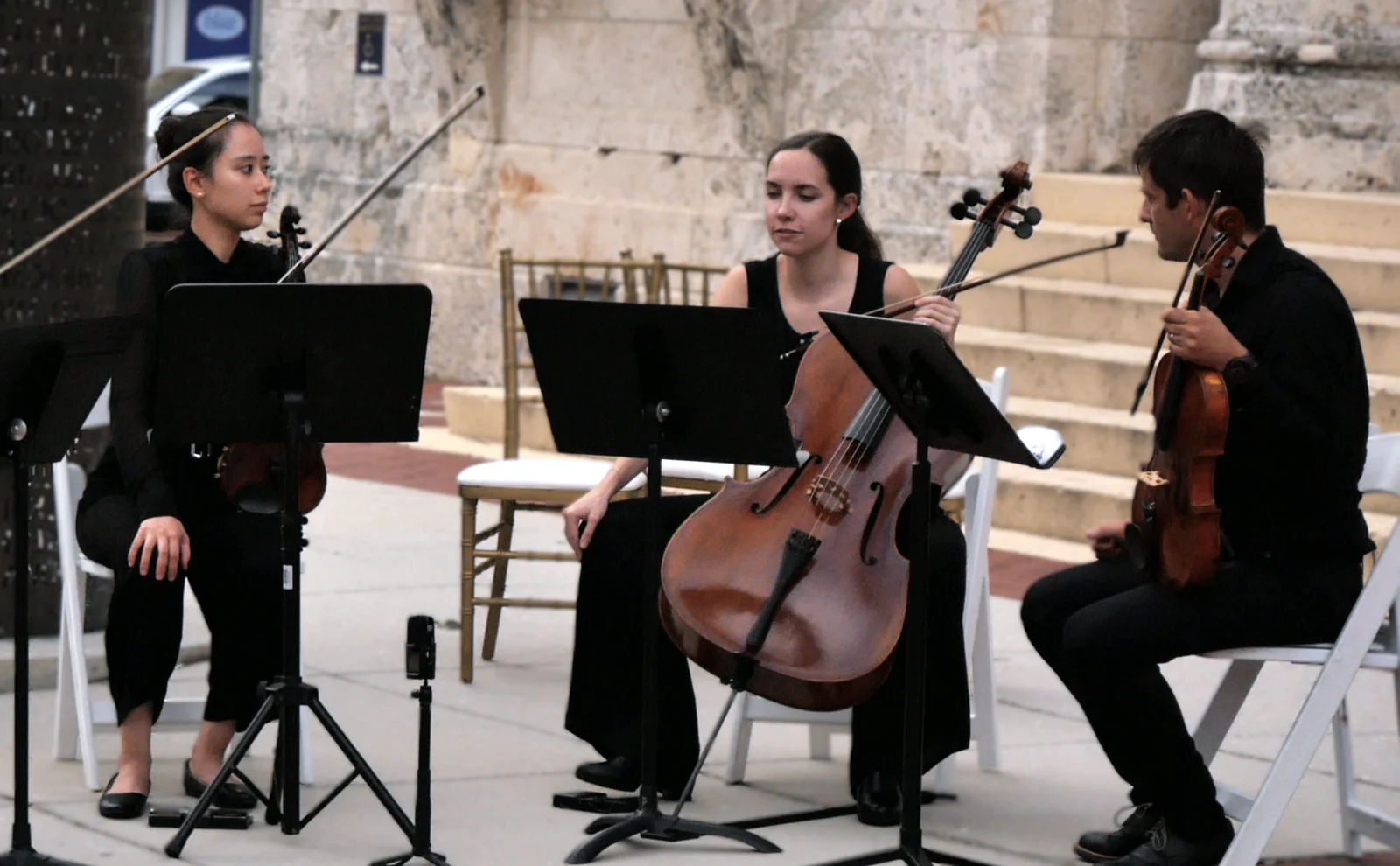
Three independent parts allow more harmonic motion and accompanying detail. A trio may suit couples who want layered strings without the full footprint of four musicians. Ask which instruments are proposed, because the range and available arrangements depend on the lineup.
Think of a trio as its own musical choice rather than a “nearly quartet” compromise. A well-suited three-part arrangement can feel complete; a song designed around four essential voices may require adaptation. Tell us which passage or musical effect matters most so that we can discuss whether the trio format serves it well.
The extra musician changes the seating plan and visual presence. Your venue should consider chairs, stands, cases and access—not merely whether three people could fit into a corner. A comfortable performance area supports a more relaxed presentation.
What makes a quartet distinctive?
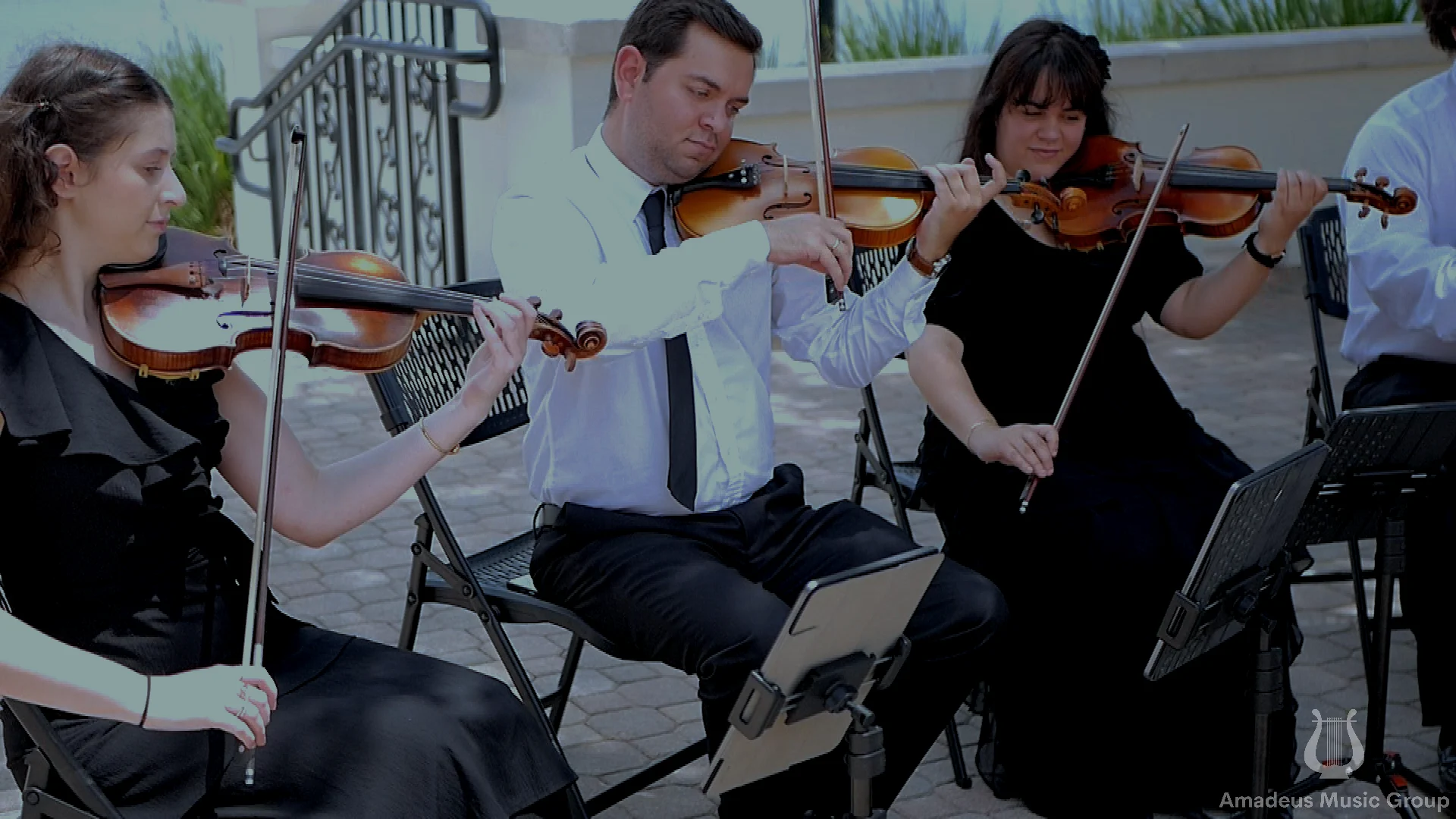
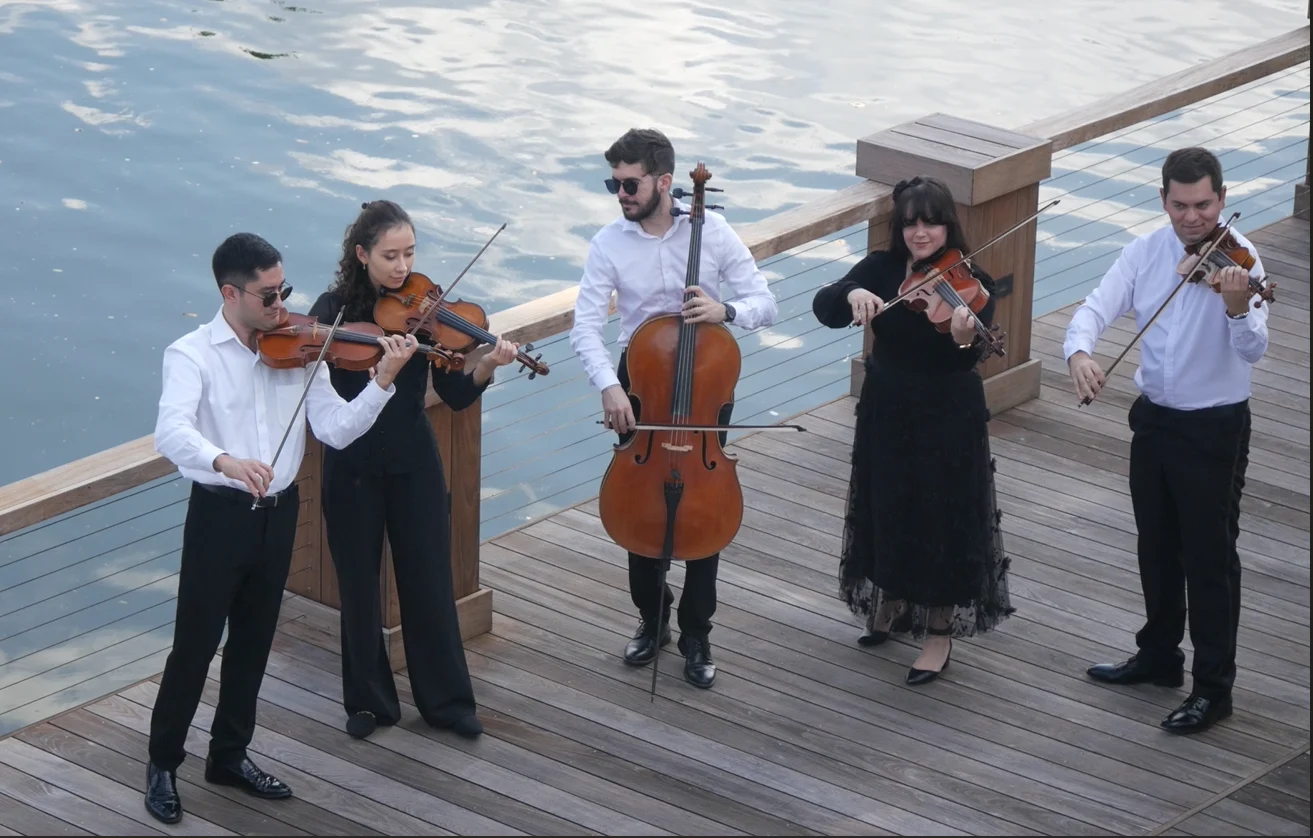
A traditional string quartet has two violins, viola and cello. The melody can move between players while other voices supply harmony, counterpoint and bass. This interaction gives the ensemble a broad expressive range, from restrained ceremony music to lively contemporary cocktail-hour arrangements.
Choose a quartet when that layered sound is central to your vision. It also creates a recognizable ensemble presence in the room. However, four instruments are not a substitute for evaluating background noise or speaker coverage. More musical texture does not guarantee that guests at the back of a windy beach ceremony can hear clearly.
Match the ensemble to the actual venue
Indoors, reflective surfaces can make strings feel resonant, while heavy furnishings can absorb sound. Outdoors, wind, surf, fountains and surrounding activity can compete with the performance. Tell us whether guests will sit close together, spread across a lawn or move between several reception spaces.
A useful recommendation combines your preferred sound with a practical floor plan. For example, a couple wanting a spare melodic entrance in a small covered courtyard might favor solo violin; a couple who loves independent harmony in contemporary arrangements may prefer a quartet, even for an intimate event. These are musical examples, not attendance rules.
A listening-first decision checklist
Choose two or three samples on our Listen page and describe what you like: the melody, fuller harmony, energy or overall mood. Then share your ceremony and cocktail-hour schedule. A video demonstrates a musical style, not a guarantee of specific named performers for your date.
Amadeus serves Florida and Greater Boston and coastal New England through coordinated regional musicians. Share your date and venue so we can help you choose a lineup that fits the music and the setting.
- Which sound feels right for your entrance and cocktail hour?
- Which instrument combination and arrangements are available?
- Can the venue provide a safe, protected performance area?
- Does the setting need an amplification discussion?
- What coverage fits the final event-specific quote?