Wedding Planning
How Much Space Do Wedding Musicians Need? Venue Setup, Seating, and Weather Requirements
Wedding musicians need more than a place to stand or sit: allow room for instruments, bow movement, chairs, music stands and safe access. The required footprint depends on the ensemble and setup. Amadeus’s published requirements include a shaded or covered area, armless chairs for string players and electrical access when amplification is used; confirm the actual layout before finalizing your floor plan.
Plan a performance zone, not a headcount
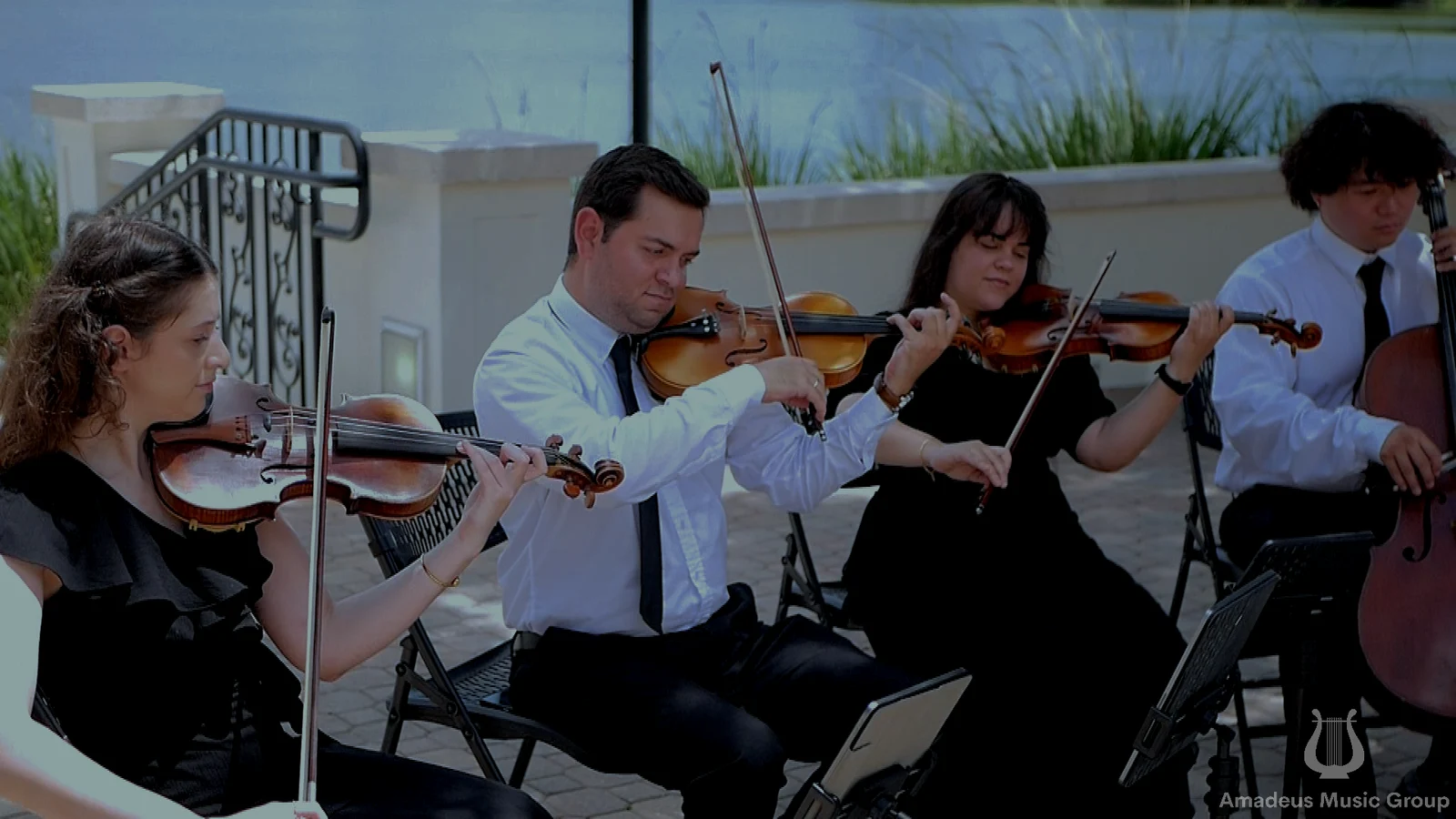
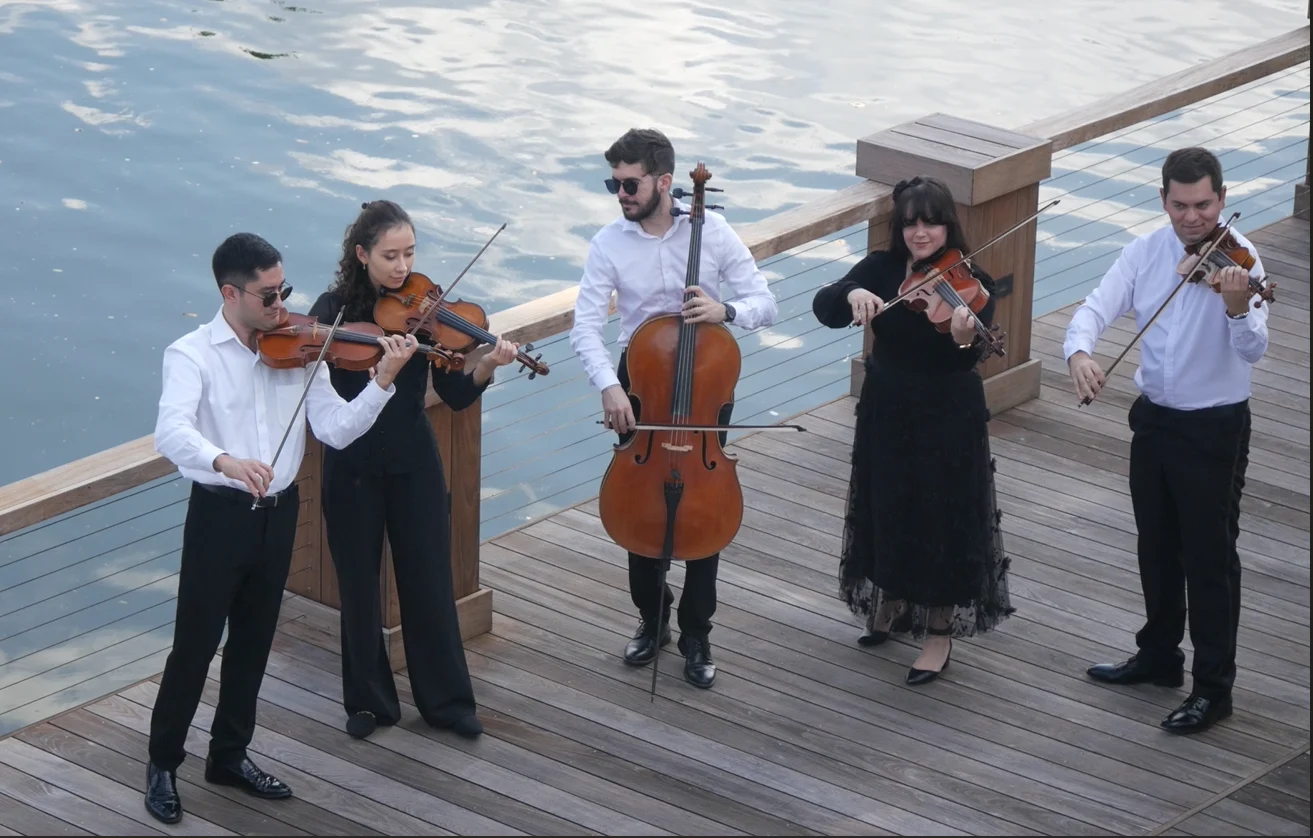
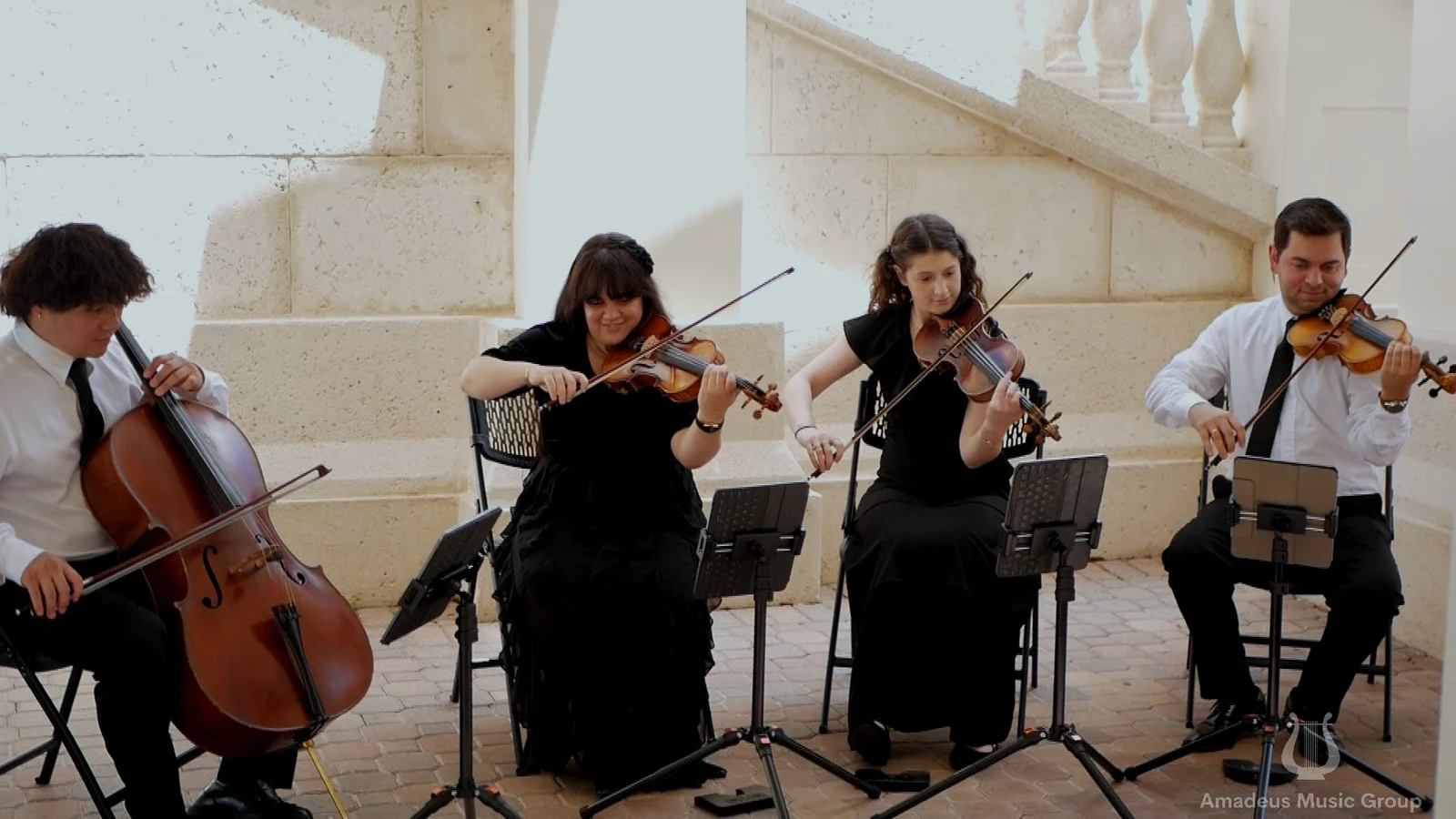
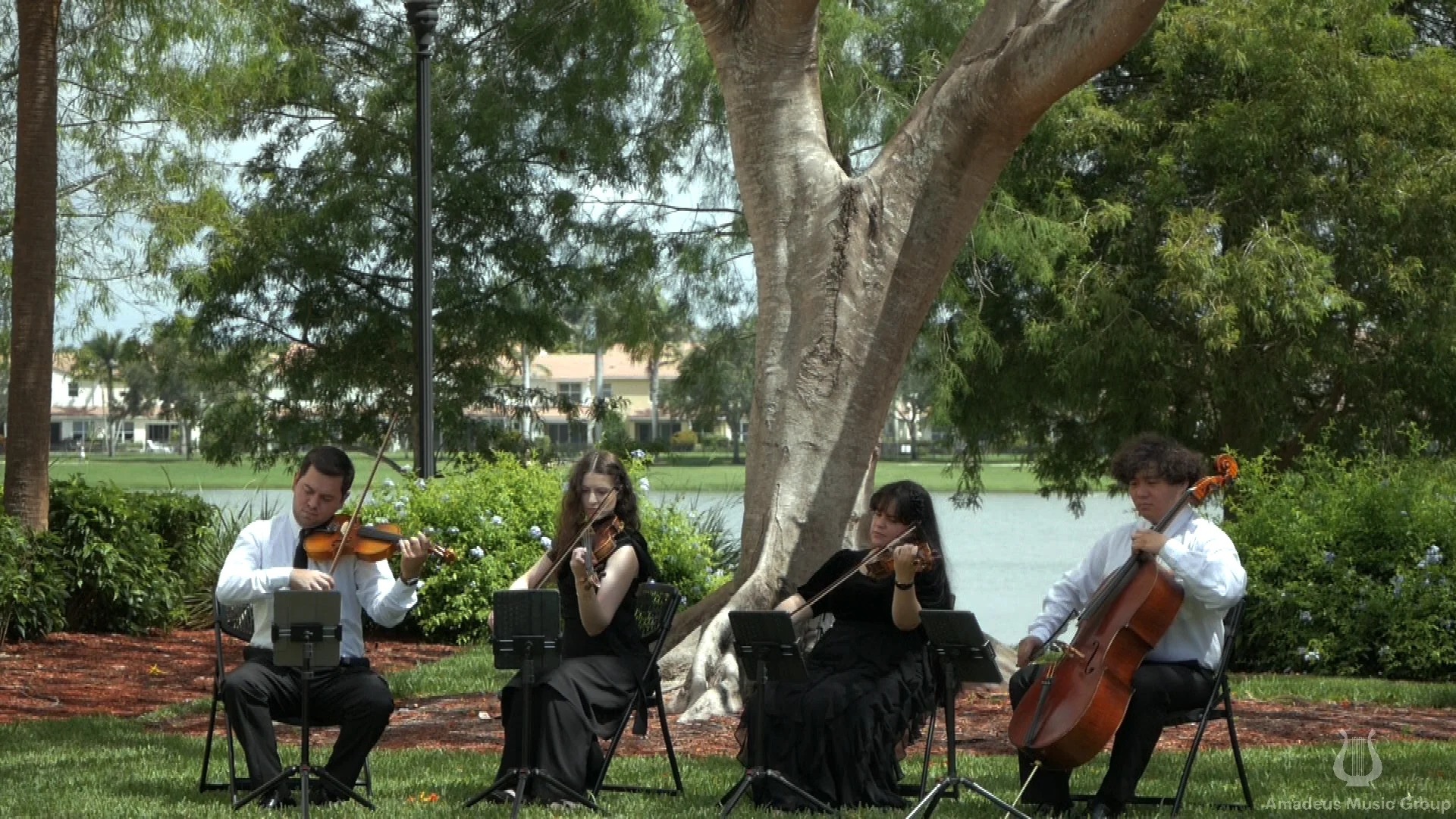
A soloist needs a safe working area even though there is only one performer. A duo, trio or quartet requires progressively more positions, but four musicians do not simply fit into any space that holds four chairs. Bows move, a cello has its own floor position, and music stands must be readable without obstructing neighboring players.
Treat the ensemble footprint as a protected performance zone. Keep it separate from guest queues, aisle traffic, doors and service paths. Nearby instrument cases and any sound equipment also need a safe location, even if they are not visible in the ceremony photographs.
We do not publish an invented square-foot requirement. A drawing or photograph with proposed furniture positions is a better starting point than a universal number. Ask the musicians to confirm the layout for the specific lineup and equipment you book.
Relative space needs by ensemble
The following comparison describes relative planning needs, not measured minimum dimensions. Your musicians and venue should approve the final footprint.
Do not squeeze players into a leftover gap once all other furniture is assigned. Giving the ensemble an agreed location early makes it easier to preserve both the sound and the visual presentation.
| Ensemble | Relative setup | What to verify |
|---|---|---|
| Solo violinist | One performance position with bow clearance | Standing or seated plan, stand and safe access |
| String duo | Two coordinated positions | Instrument pairing, chairs and lower-instrument space |
| String trio | Three positions with shared sightlines | Lineup, stand placement and clear bow movement |
| String quartet | Four positions arranged for ensemble communication | Chairs, cello position, stands, cases and circulation |
Chairs, seating and practical equipment
Amadeus’s FAQ calls for armless chairs for string players. Arms can interfere with playing movement, and unstable or awkward seating can make performance difficult. Ask the venue to confirm suitable chairs rather than assuming any decorative event chair will work.
The instrument combination matters. A cello player needs a stable seated position and an appropriate surface for the instrument. Other lineups may have different requirements. If you book harp, piano, guitar or another format, request the specific setup instructions rather than applying a string-quartet plan to every ensemble.
Clarify who supplies chairs and how the performance area will be ready at arrival. The musicians and venue should also discuss stands and any other required equipment. Do not assume a package description establishes every supply responsibility unless the booking terms say so.
Stable surfaces and safe circulation
A flat, dry, stable surface supports safe seating and instrument placement. Uneven lawn, soft sand or a sloping deck can create problems for chairs, stands and a cello position. If the ceremony is on a beach or garden lawn, ask the venue how the musicians’ working area will be made suitable.
A platform, if proposed, must be appropriate for the layout and approved by the venue and musicians. This guide does not establish structural specifications. The purpose is to identify the issue early, not tell a planner to improvise a stage from an unverified size estimate.
Keep cables and equipment out of guest routes when amplification is used. A position that looks attractive on a photo plan may become a busy pathway during arrivals or cocktail service. Review the space as it will actually be used, not only as an empty room.
Shade and weather protection
String instruments need protection from direct sun, rain and blowing sand. A shaded position should remain usable during the performance window, not just at the time of a morning venue visit. Discuss the expected sun position and whether the cover offers real protection.
A small umbrella or partial shelter may not protect the full ensemble, especially in wind-driven rain. Send details of the proposed area and establish a covered or indoor alternative. Protection is necessary for the instruments and the performers; it is not merely a comfort preference.
Florida waterfront and garden ceremonies need an explicit weather plan. Greater Boston and coastal New England outdoor events also need a protected alternative when conditions change.
Electrical access when amplification is used
Acoustic strings may not require electrical supply for the instruments, but an amplified performance does. Tell the venue which provider is handling instrument sound and which provider is responsible for the officiant’s microphone or recorded tracks.
Confirm access to power and safe equipment placement through the venue and music team. This article does not specify outlets, cable lengths or speaker wattage, because those requirements depend on the agreed setup. Outdoor electrical arrangements should not be guessed from a nearby indoor socket.
The indoor backup area may have different sound characteristics or installed equipment. Include it in the discussion so that a weather move does not leave the team without an appropriate power or audio plan.
Arrival, setup and relocation timing
Ask the musicians to confirm arrival and setup needs for your event. Access checks, unloading, stairs and a sound check can all affect readiness. There is no universal setup-time promise here; the venue and ensemble should agree on the schedule.
If musicians continue into cocktail hour in another location, allow time to move instruments and reset. Tell your planner about elevators, service routes or outdoor paths. Guests can transition quickly while the musicians still need a safe interval before playing again.
Name a venue contact who can assist at arrival and a planner responsible for the current floor plan. Both the primary position and weather alternative should be ready before guests enter the performance area.
A final venue setup checklist
Share your venue layout with Amadeus when requesting availability. We can discuss the requirements for your actual ensemble and help your venue and planner prepare a practical performance area without relying on invented measurements.
- Approved ensemble position with instrument and bow clearance
- Suitable armless chairs for string players
- Stable, dry surface and safe case storage
- Shade or cover for the full performance window
- Confirmed indoor or protected weather alternative
- Electrical and sound responsibilities if amplification is used
- Arrival contact, access route and relocation schedule