Wedding Planning
Live Wedding Music vs. a DJ: Which Is Better for Your Ceremony and Cocktail Hour?
Neither live musicians nor a DJ are automatically better for every wedding. Live strings offer an expressive, visible performance and adaptable musical phrasing; a DJ can play specific recordings, cover a wide range of styles and coordinate recorded cues. For ceremony and cocktail hour, choose according to the sound you want, the venue and the responsibilities each provider agrees to handle.
What live musicians bring to a ceremony
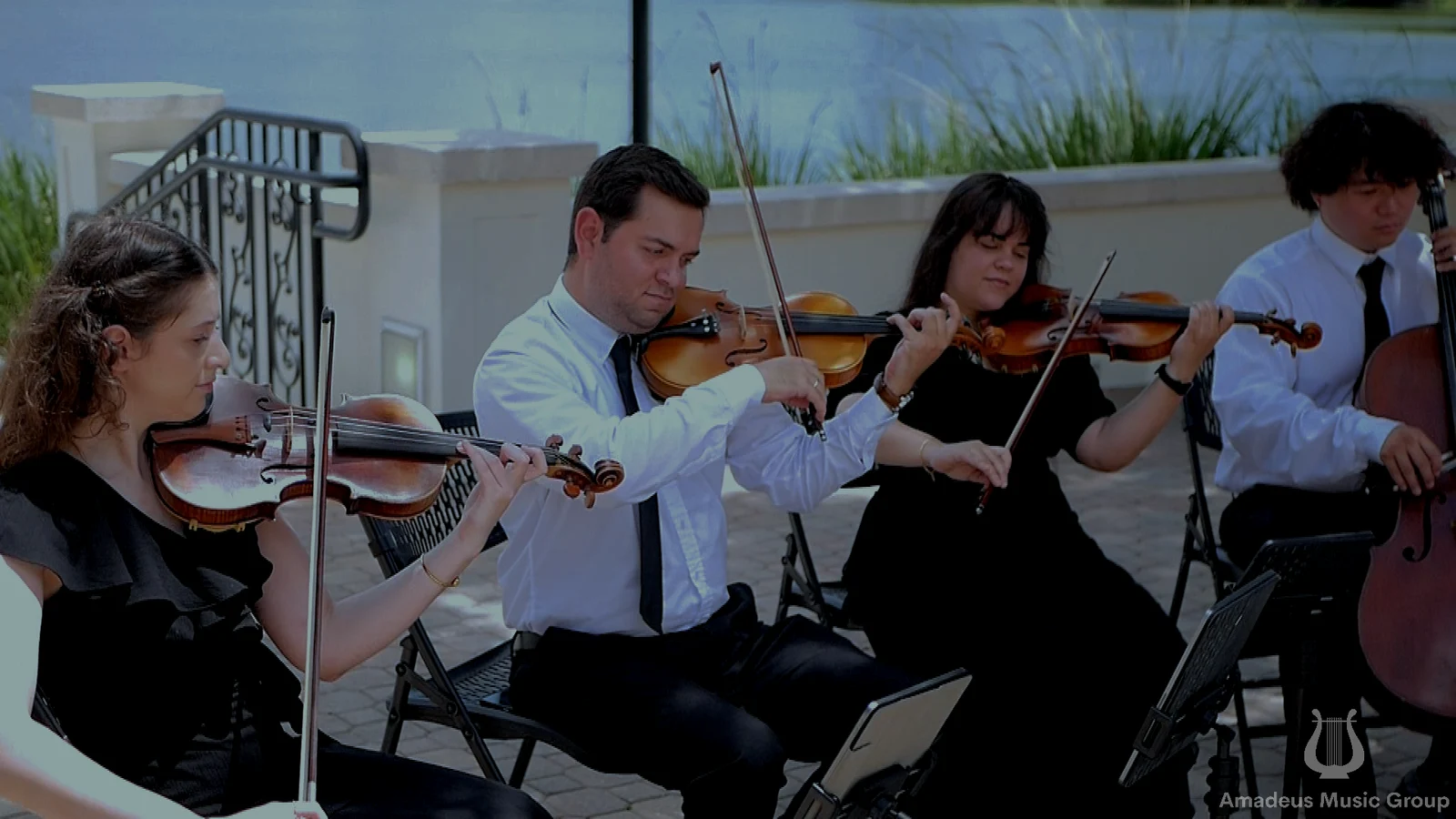
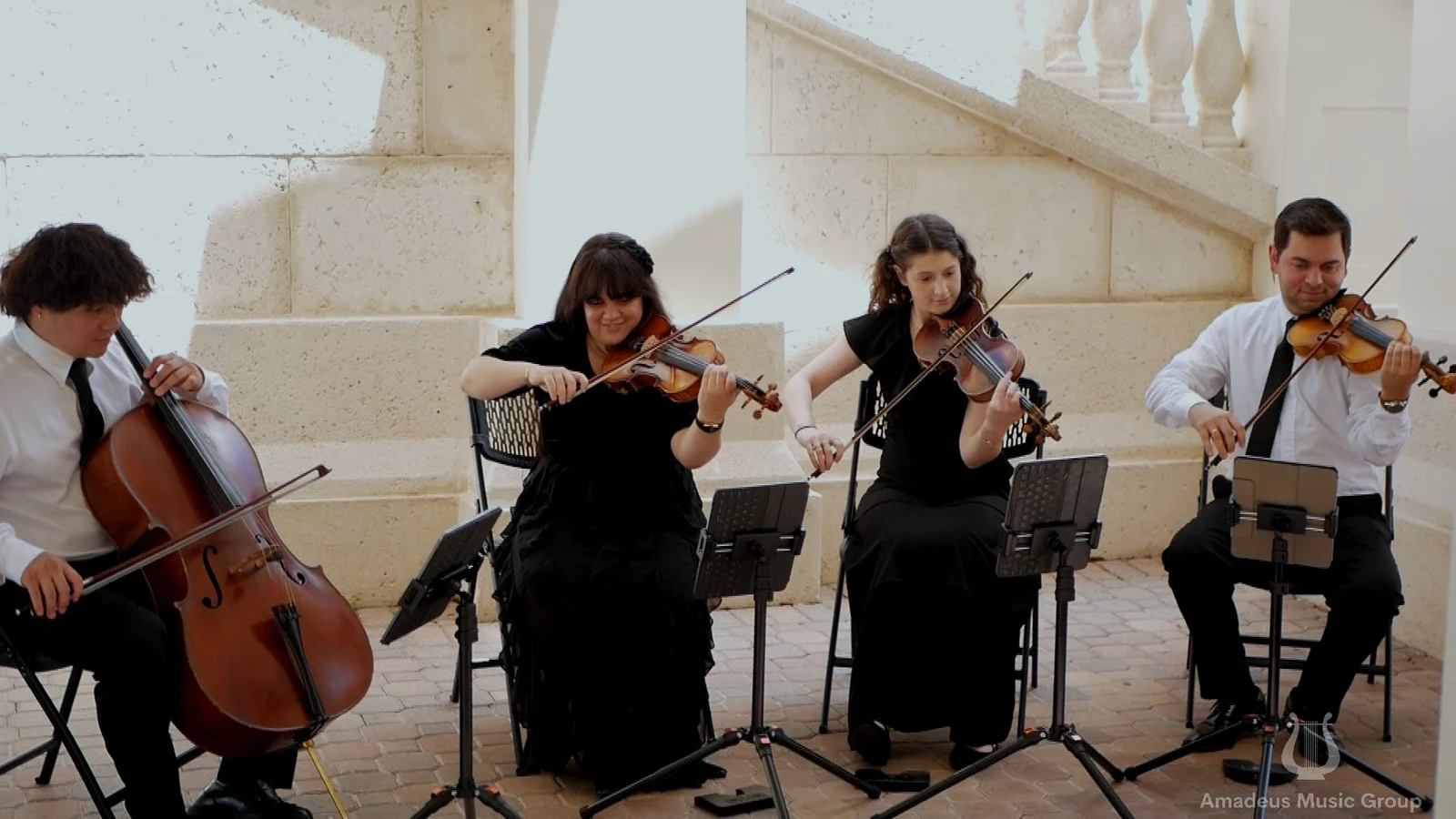
A live ensemble creates music in the room rather than reproducing a recording. The players can shape dynamics and phrasing around the character of the moment. Within the agreed arrangement, they can also conclude a musical passage as an entrance finishes or sustain an appropriate section while the wedding party moves.
This responsiveness is particularly useful when the pace of entrances varies. It still requires preparation: the musicians need the processional order, a visible cue-giver and instructions for song changes. Live performance is not a substitute for a clear ceremony timeline.
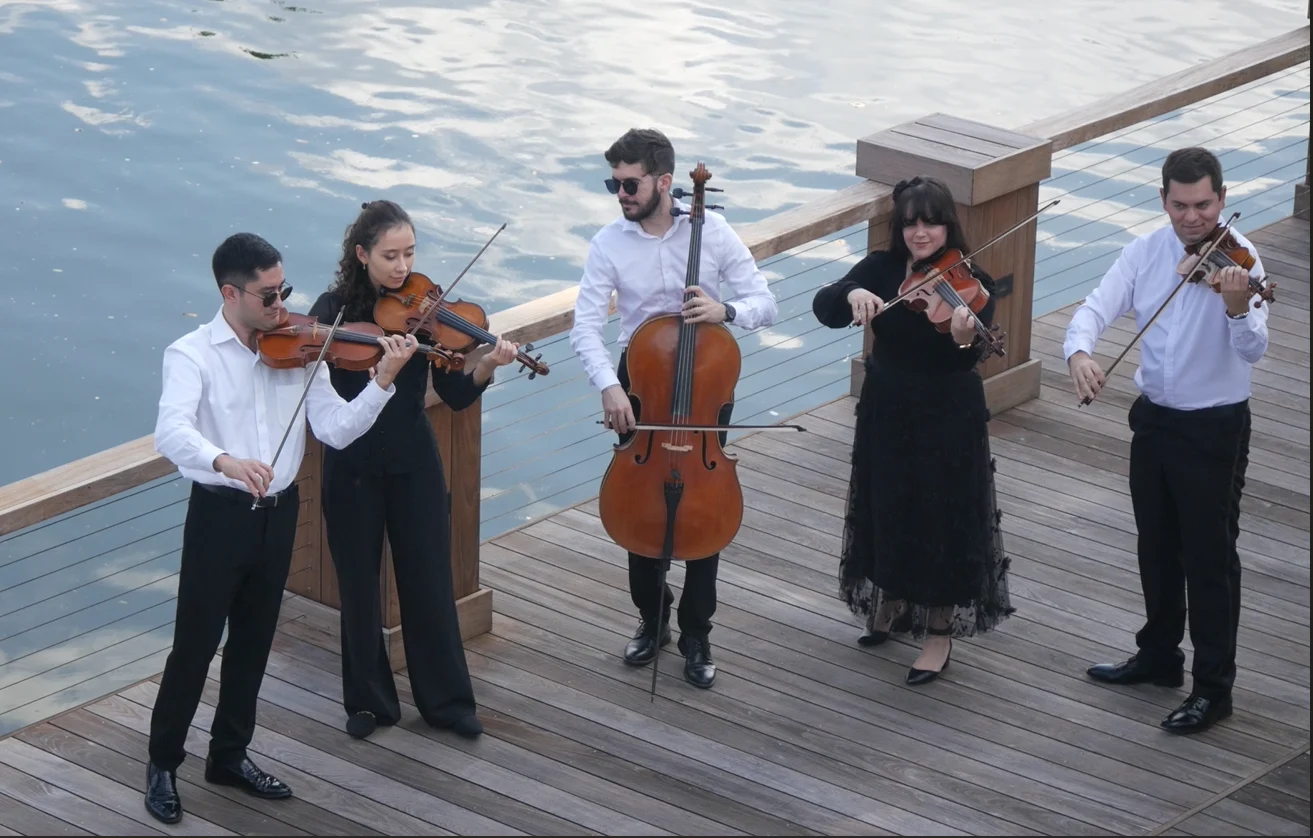
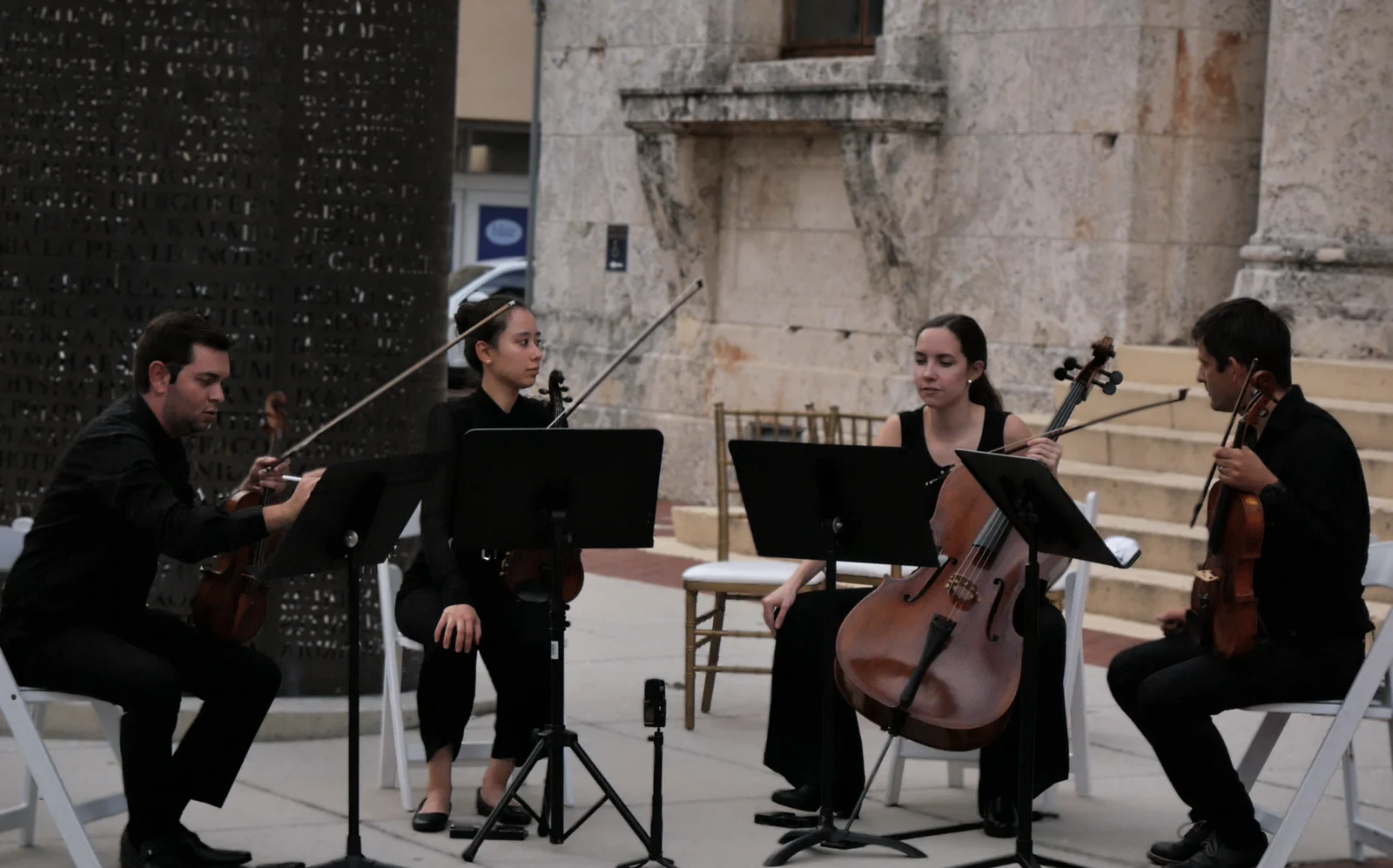
Strings also provide a visual focal point. A solo violinist, duo, trio or quartet has a different presence as well as a different musical texture. If you enjoy instrumental reinterpretations of familiar songs, live musicians can make that part of the ceremony’s identity.
What a DJ brings to a ceremony
A DJ can use a particular recording, including the singer’s voice and the production details that make the track meaningful to you. This is a strong choice if you want the exact version you know, rather than an instrumental interpretation. Discuss the starting point, edit, ending and cue for each selection.
Depending on the contracted services, a DJ may also supply ceremony microphones or manage audio playback. Do not assume that every reception DJ package includes a second ceremony setup, an officiant microphone or a cocktail-hour speaker system. Confirm coverage and responsibilities in writing.
Recorded cues can be very precise, but someone still needs to communicate when the wedding party is ready. Ask how the DJ will accommodate an aisle walk that is shorter or longer than expected, and whether any editing should be completed before the wedding day.
Cocktail hour: music that supports conversation
Live strings can create a polished atmosphere while guests mingle. Classical and contemporary arrangements give the program variety without necessarily making the performance the center of attention. Placement and dynamics matter: musicians should complement conversation rather than compete with a busy bar or a group of guests nearby.
A DJ can offer a carefully curated cocktail-hour playlist that spans styles beyond an acoustic ensemble’s instrumentation. If the couple loves a particular recorded sound, this may be a better fit. The DJ also needs an agreed volume level and speaker position so that guests can talk comfortably.
Think about the mood, not just the technology. A lively instrumental pop selection and a soft recorded jazz track may each suit different moments. Ask each provider how they would approach your space and event flow rather than relying on a broad label such as “elegant” or “fun.”
Compare practical strengths fairly
These are general differences, not guarantees about any individual vendor. A provider’s actual skills, equipment and written scope matter more than a category name.
| Consideration | Live musicians | DJ |
|---|---|---|
| Musical sound | Instrumental performance shaped in the moment | Specific recordings and broad recorded styles |
| Ceremony timing | Adaptable phrasing within the prepared arrangement | Cueing, edits and fades discussed in advance |
| Visual presence | Performers and acoustic instruments | DJ position and agreed audio setup |
| Song requests | Arrangement must suit the ensemble and preparation time | Requested recording and playback access need confirmation |
| Spoken audio | Separate responsibility unless agreed | May be provided if included in the contracted service |
Sound requirements are separate from musical style
Acoustic instruments may not need amplification in a quiet, sheltered setting. Wind, surf, fountains, traffic or a widely spread guest area can change that assessment. A quartet’s richer harmony does not automatically solve audibility at an outdoor ceremony.
A DJ needs appropriate playback equipment and a safe setup for the location. With either option, identify who is responsible for the officiant’s microphone, announcements, any recorded ceremony element and instrument or music coverage. One speaker arrangement may not serve every part of a large property.
For Florida waterfront settings and coastal New England celebrations, discuss protection from weather and the route to an indoor backup area. Do not leave the sound plan until guests have taken their seats. The venue, planner and music providers should know how the primary and backup layouts differ.
Combining strings and a DJ
A combined plan can give you live ceremony music, strings for cocktail hour and a DJ for the reception. It can also pair live processional music with DJ-managed speech audio, provided the responsibilities are agreed. There is no need to treat the decision as an all-or-nothing competition.
Make the handoff explicit. Identify when the musicians finish, when the DJ starts, who handles an announcement and whether the ensemble needs time to move or pack away. Avoid accidental silence caused by both providers expecting the other to continue, or overlapping music from two systems.
If a live ensemble will perform a first dance or another reception moment, confirm that additional coverage rather than assuming it follows from a ceremony booking. Give both teams the same final timeline and versions of any shared song information.
Questions that help you decide
Listen to Amadeus performances and share your date, venue and preferred atmosphere. We can discuss live music that complements your wedding plan, including coordination with your chosen DJ, without asking you to give up the strengths of either approach.
- Do we want the exact recording or an instrumental interpretation?
- Which ceremony moments need live cues or recorded playback?
- What sound equipment and speech audio are included?
- Where will guests gather during cocktail hour?
- Who owns the transition between providers?
- What does each written quote actually cover?